Back
Redesigning event-based friendships
A complete UX overhaul that increased event attendance by 33% and user engagement by 48% for a friend match-making platform.
My role
Lead UX/UI Designer working with 2 mobile developers.
Challenge
A friend match-making app with a unique premise: connect people who attend the same events. The concept was solid, but the execution wasn't delivering. Users struggled through sign-up, the ticketing process created friction, and once people attended events, there was no way to nurture those connections. Event attendance was stagnant and engagement was declining.
Process
I started by analyzing user behavior and identifying drop-off points in the existing app. Conducted interviews with active users to understand what worked and what frustrated them. The insights were clear: sign-up was too complex, buying tickets felt disconnected from the social experience, and there was no reason to return to the app after an event.
I mapped new user flows focusing on reducing friction at every step. Created prototypes and tested them with users to validate the approach before moving into high-fidelity design.
Solution
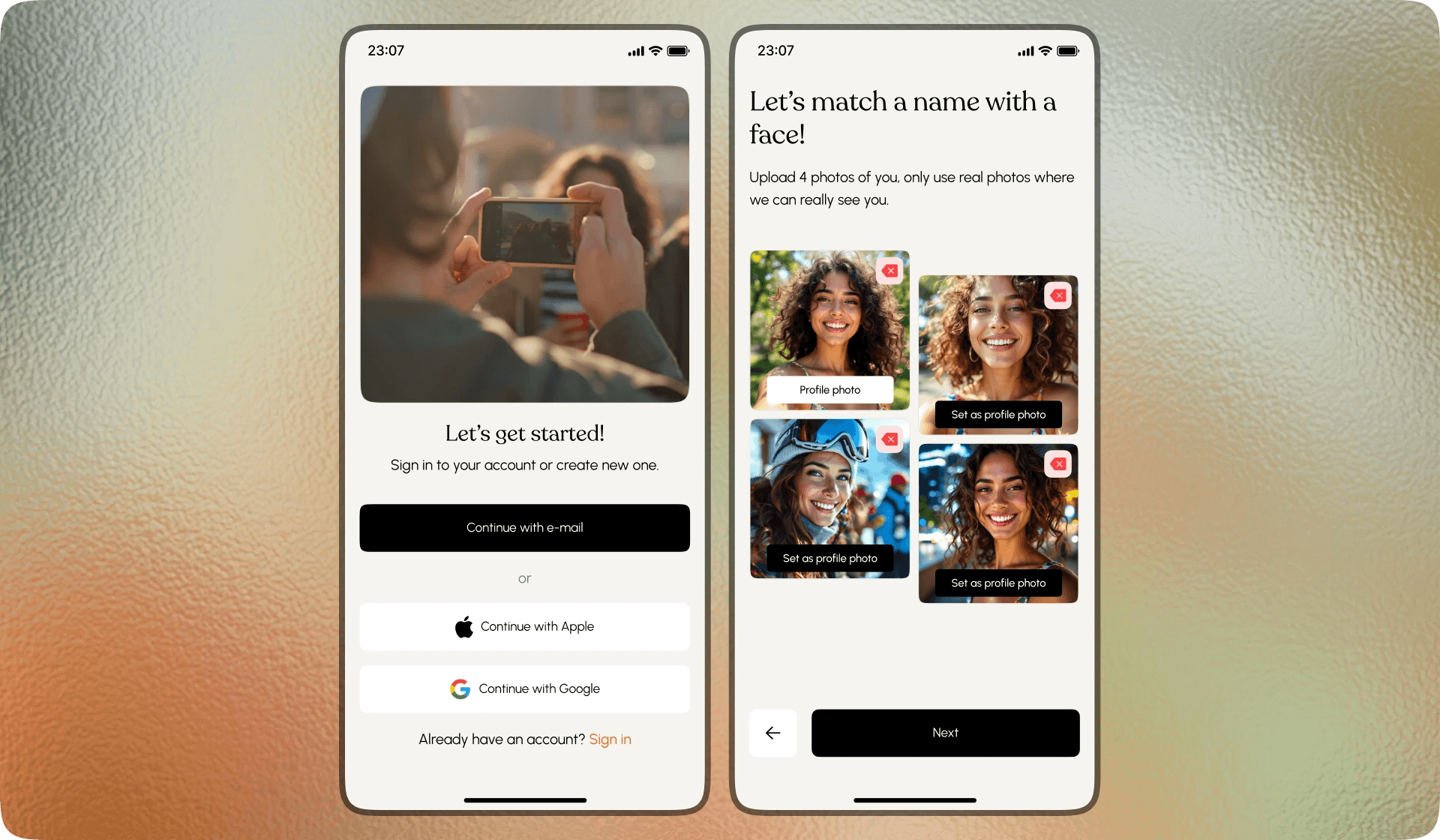
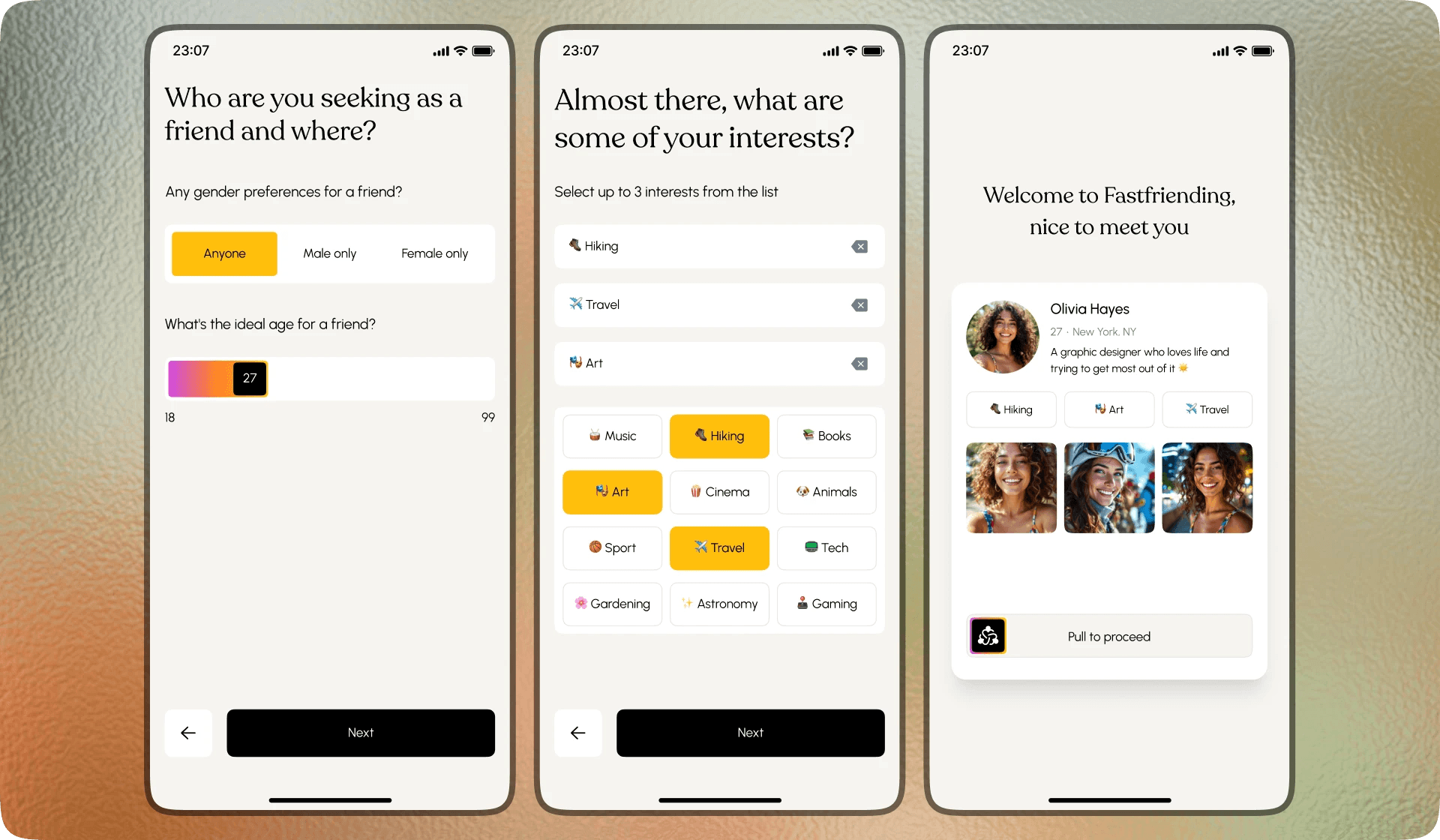
I redesigned the sign-up experience to be quick and intuitive, removing unnecessary steps that were losing potential users.
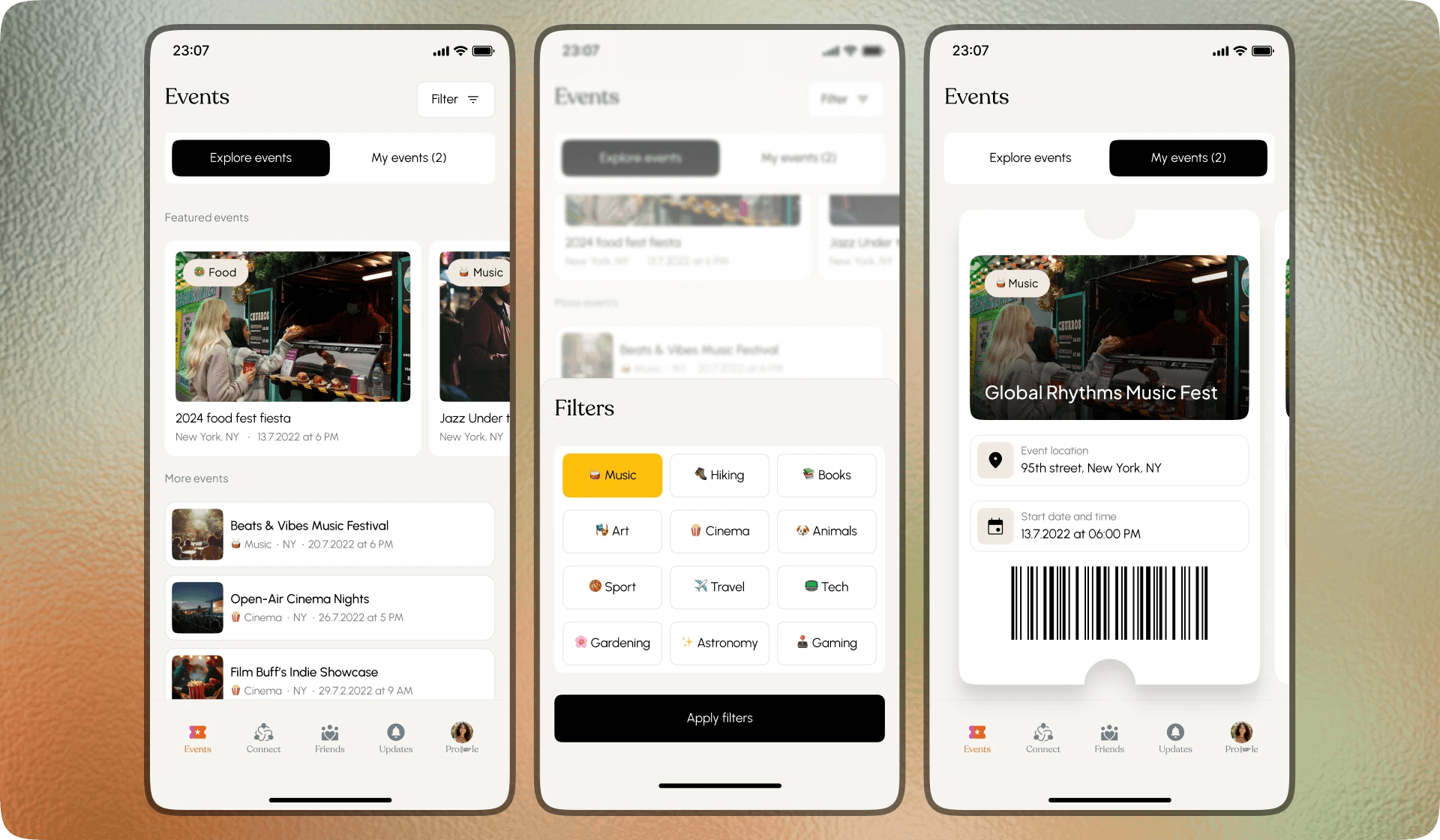
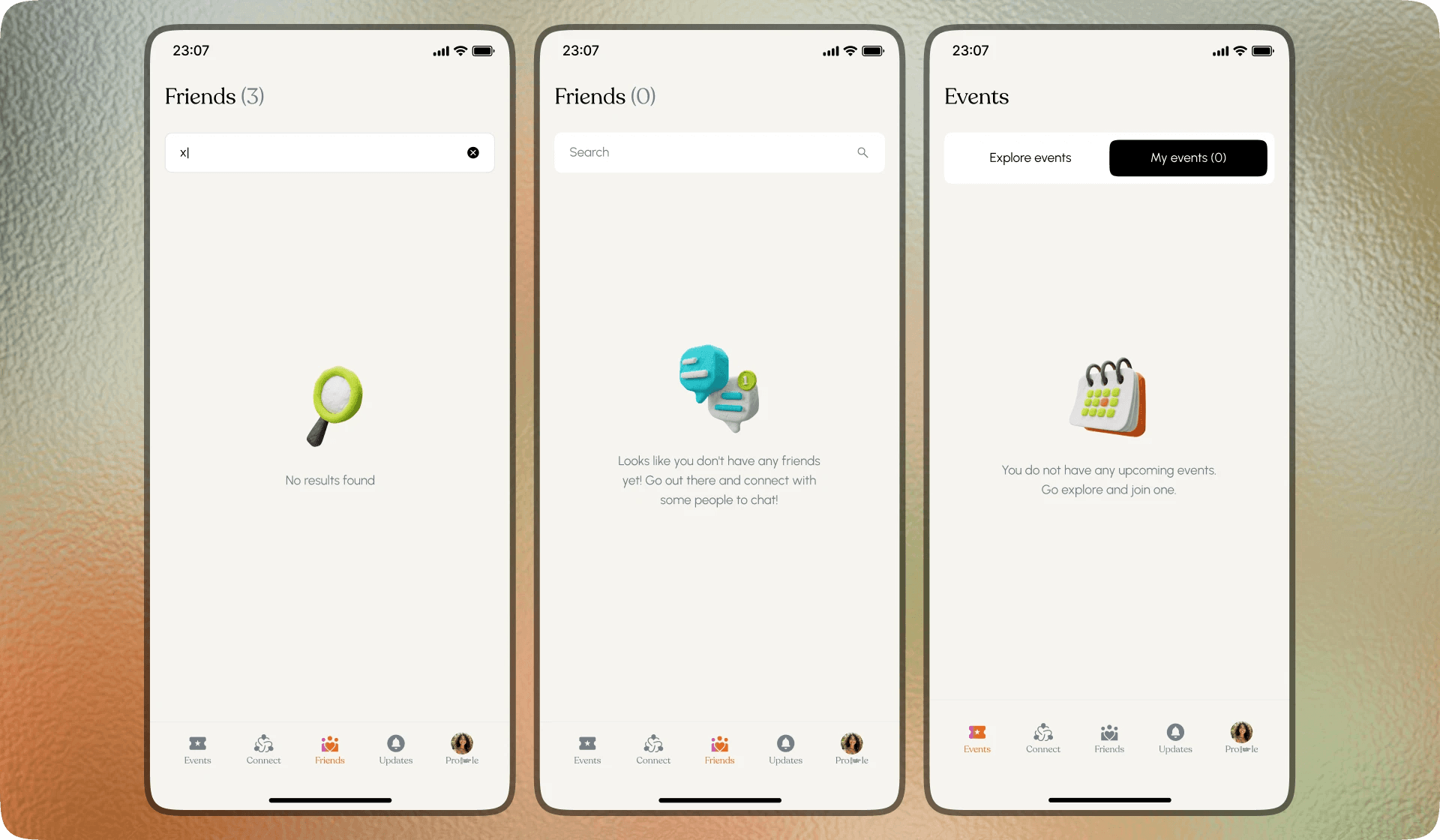
The ticketing flow was streamlined and integrated seamlessly into the social experience. Buying a ticket now felt like joining a community, not just a transaction.
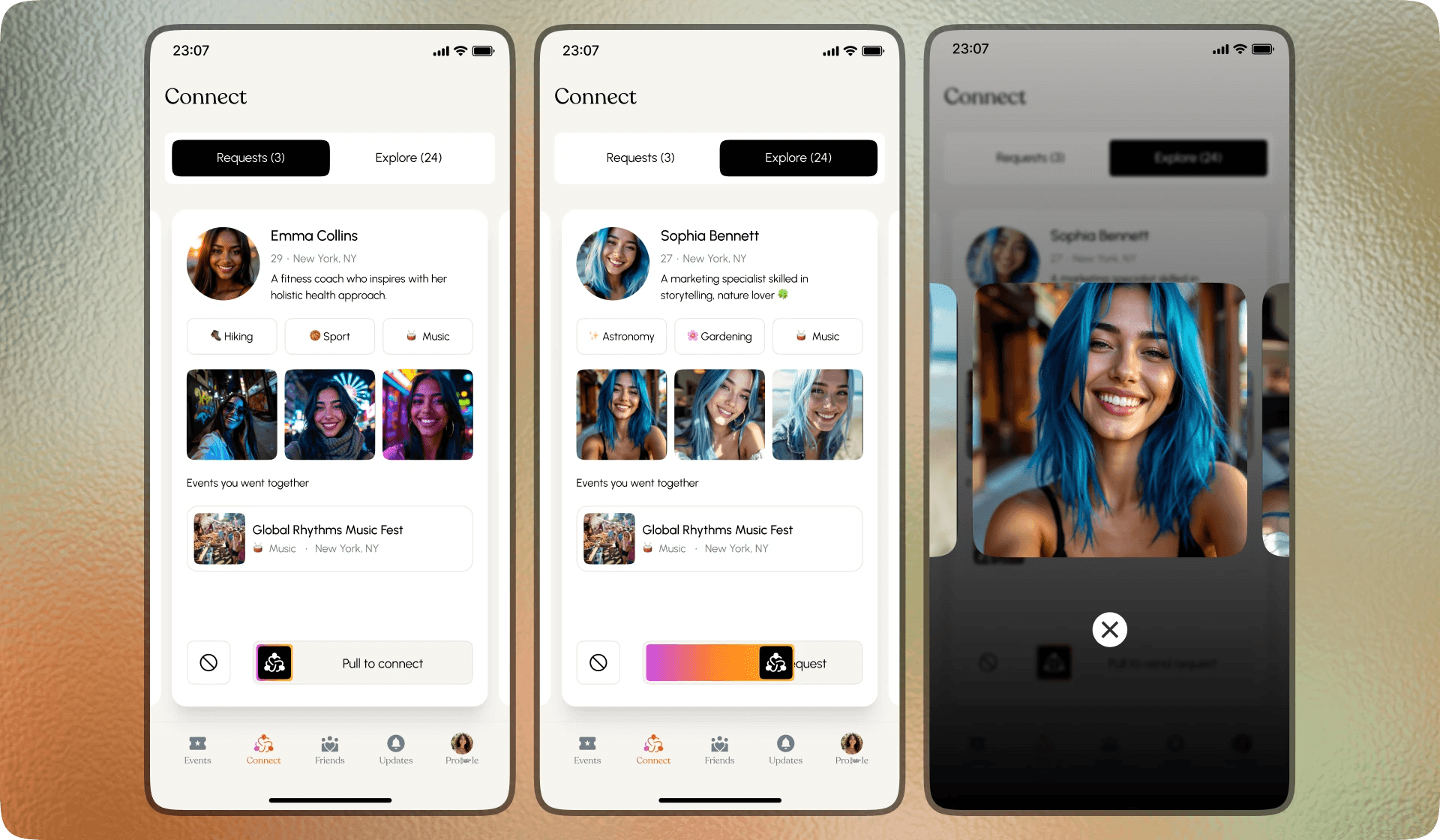
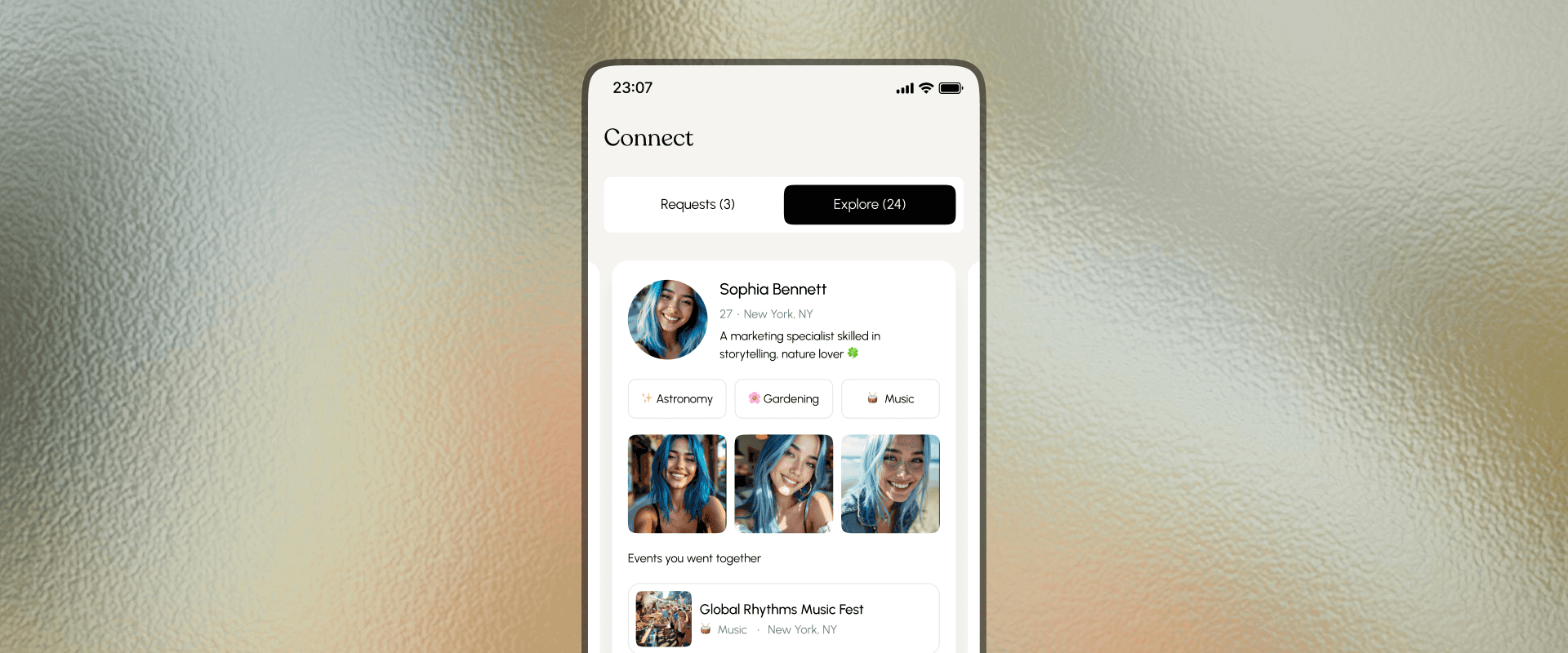
I added messaging functionality so people could connect after events and introduced inner circles, a feature allowing users to form closer groups with people they clicked with. These social features gave users a reason to stay engaged between events and build genuine friendships over time.
Impact
Event attendance increased 33% based on ticket sales data. User engagement jumped 48% measured through app analytics. Paid feature adoption grew by 25%.
The redesign transformed how people experienced the app. Sign-up friction disappeared, ticketing became part of the social journey, and the new social features created lasting connections beyond single events. Users were no longer just attending events, they were building communities.